Conditions
UNDERSTANDING NEURONAL HETEROTOPIA
Neuronal heterotopia refers to grey matter located outside its expected position in the brain. These differences arise during brain development. Their causes and effects vary widely. Some forms are associated with epilepsy or other neurological features; some genetic conditions also affect organs beyond the brain.
What to do after a diagnosis
Ask your healthcare team what the imaging findings mean in youor your loved one’s situation, whether genetic assessment is appropriate, and whether other health systems require evaluation. Keep a record of symptoms and questions; our education and support resources can help you prepare for appointments.
Please remember thar the information here is educational, and is not a substitute for individualized medical advice.
Types of Neuronal Heterotopia
Grey matter heterotopia (GMH) – unmbrella term
Grey matter heterotopia is a broad description for grey matter found in an atypical location. Different patterns can have different causes, clinical implications and care needs.
Periventricular nodular heterotopia (PVNH)
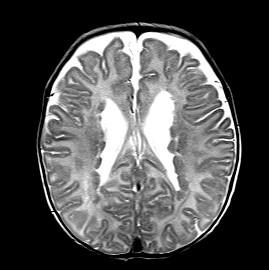
In PVNH, nodules of grey matter are found along the walls of the brain’s ventricles. PVNH can have several genetic and other causes. Its clinical features range from few or no symptoms to epilepsy and, in some cases, additional neurological or systemic findings.
Based on current research, PVNH is thought to be the most common form of neuronal heterotopia disorders.
Subcortical band heterotopia (SBH)
Sometimes called “double cortex,” Subortical Band Heterotpia or SBH involves a band of grey matter beneath the cerebral cortex creating smooth, symmetric, band-like layers of grey matter located deep within the matter. The extent of the band and associated findings vary.
Subcortical Heterotopia (SH)
In this form, the grey matter along with glia are located in the cerebral white matter between the cortex and the lateral ventricles.
Associated Conditions
FLNA-related conditions
Certain changes in the FLNA gene, mainly a loss of function of the FLNA gene, are associated with PVNH and may also affect connective tissue, blood vessels, the heart, lungs and other systems. The pattern and severity of the impact are not the same for everyone. Our FLNA work recognizes the importance of multidisciplinary care and research. And as such, we are proud to have created the FLNA Research Consortium. Stay tuned for an official announcement.
Malformations of Cortical Development
On occasion, PVNH or SBH will develop along other malformations of cortical development, such as Polymicrogyria (PMG), Lissencephaly Spectrum (Agyria,Pachygyria), Microcephaly or Megalencephaly, Schizencephaly, and Focal Cortical Displasia.